Wilkeson council member proposes interim solution to bridge closure to stave off economic collapse
Published 11:00 am Wednesday, July 16, 2025
This article has been updated from the print version clarifying that Wilkeson Council member Jayme Peloli has not yet submitted a formal Washington State Strategic Reserve Funds application to Gov. Bob Ferguson’s office.
Additionally, The Courier-Herald failed to include a quote from WSDOT concerning the liability and legal issues of the Wilkeson Gateway Project, which was received before deadline. The article has been updated.
A Wilkeson City Council member is proposing an interim solution to help her community’s economy — and Mount Rainier National Park tourists — before the state can construct a new Carbon River/Fairfax Bridge.
Jayme Peloli, newly-appointed elected official and sixth-generation Wilkesonian, hit the ground running on what she’s calling the “Wilkeson Gate Access Program” last April when the Washington State Department of Transportation permanently closed the state Route 165 bridge when inspectors found a buckling support column.
Closing the bridge to all traffic had three immediate effects.
First, it completely cut off access to Mount Rainier’s Mowich Lake Entrance, the Carbon River Ranger Station, and other outdoor recreation areas, much to the chagrin of nature lovers.
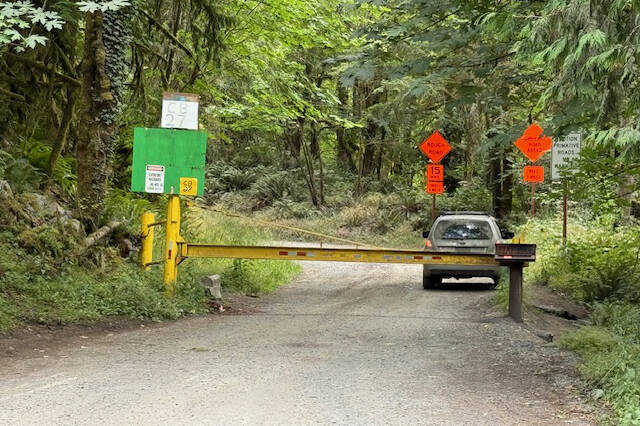
But it also cuts off a handful of residents that live on the other side of the bridge in the Carbon Canyon from the rest of the area from critical emergency services, as the only access to their homes now is an unpaved, emergency-only road owned by private parties and which WSDOT has an easement to use; it could take an ambulance or other first responder vehicle up to an extra 30 minutes, at least, to respond to an emergency via this road due to the winding path and locked gates.
Due to this, Pierce County gave area residents two AEDs in case anyone suffers a heart attack.
However, with no landlines due to a November storm and little to no cell phone service, residents have been figuring out a way to use radios and air horns to communicate with each other if an emergency of any sort were to occur.
Finally, Wilkeson’s economy is being hit hard.
Peloli estimates that during peak park season, an average of 500 to 700 cars pass through the city of 490 residents daily — and upward of 1,000 on the busiest of days.
Now there’s nary a tourist in sight.
“It’s an eerie quiet,” she said in a recent interview.
Peloli recently presented some economic findings to the Buckley City Council on July 8 based on reported Wilkeson business revenue loss and regional traffic decline patterns. Buckley is the latest governing body to pass a resolution urging the state to pursue an interim solution for these three issues, since they’re not going away anytime soon — there is no funding for a new bridge, WSDOT has said, and even if funding is secured, it would take years to construct one.
According to Peloli, Wilkeson was projected to generate $1.8 million in small businesses and tourism-related revenue like Airbnb rentals; Peloli said the local rentals were fully booked for the season, but with the closure came a wave of canceled plans.
Instead, the town is expected to only bring in a quarter of that, and Peloli said Wilkeson won’t be the only victim, as other communities like South Prairie, Carbonado, and Buckley also get Mount Rainier tourism business.
Over the next five years, Peloli estimates a loss of $16 million for the whole corridor — losses that may not be recouped, if an interim solution is not implemented quickly.
“This is a long-term sustainability issue,” she told the Buckley City Council. “People start to re-route a different way around the mountain. They’re not going to come back through Wilkeson; they start to create new habits.”
Peloli isn’t just tackling this problem because it’s affecting her city.
“It’s personal,” she said, adding that her family has lived in Wilkeson since 1914 and ran a grocery store, which Peloli now offers as a community space and lodging. “… I’ve leveraged everything I own for this town… and generations of family before have as well. We’ve seen despair. We’ve never seen [the] town, since 1921, without a bridge.”
Peloli expressed hope that the Washington state Gov. Bob Ferguson will approve Washington State Strategic Reserve Funds for the town, similar to how the federal government passed the American Rescue Plan bill to help businesses during the COVID-19 pandemic, but discussions have yet to be productive.
“I’m quite saddened that there has been no response with funding for anything — businesses, residents, the town,” she said. “Just crickets.”
The Courier-Herald contacted Ferguson’s office, but did not receive an immediate response.
Peloli later said that she has not submitted a formal reserve fund application to the governor’s office.
WSDOT has confirmed that it is looking at Peloli’s proposal.
“WSDOT is aware of the Wilkeson Gateway Access Proposal and is participating in the discussions. WSDOT has liability concerns and legal questions that need to be explored,” a spokesperson said. “The access route that would be used for such service is one that WSDOT is currently negotiating long term rights of entry with private property owners so residents south of the bridge can continue to use the emergency access route.”
WHAT IS WGAP? AND OTHER GOALS
The Wilkeson Gateway Access Project is just one of four goals that Peloli wants to achieve in the near future, and while it’s not the most pressing need, it may be the most interesting.
Her first priority, she said, is to get Carbon Canyon residents emergency funding for better communication capabilities.
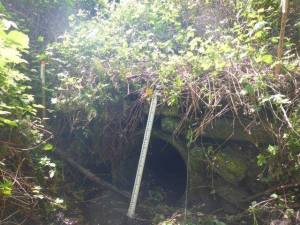
Second is to purchase some private forested land just past the Wilkeson Historic Coke Ovens.
“It could create, essentially, our own Mount Peak,” Peloli said, referring to the idyllic Enumclaw hike south of town. Such a purchase, with hiking and biking trails to attract people to town, would be “something sustainable that we can utilize and keep underneath Wilkeson’s umbrella” just in case the Wilkeson Gate Access Project proposal doesn’t get off the ground.
Peloli’s nonprofit, The Wilkeson Historical District, would be instrumental in purchasing these 137 acres, and announced a $1 million fundraising campaign last May for this effort.
And then there’s WGAP itself.
Nothing is set in stone, as there are many, many moving pieces to the proposal, but Peloli’s vision is to either have a shuttle take or pilot car to lead tourists down the private road into the Mowich Lake area during specific times of the day.
Such a solution would certainly be unable to accommodate everyone — the Carbon River entrance logged more than 69,000 visits in 2024, with 23,000 of those visitors coming in August alone — but some access is better than no access.
“We might have to create a lottery system. A lot of parks do that, and I’ve been on lists for years trying to get to the bottom of the Grand Canyon, ” Peloli said. “It’s not unheard of in the hiking community, of people waiting a long time.”
Peloli said several parties have expressed at least warmth, if not outright support, for the idea.
But even if the state and private landowners agree such a program could operate on that road, a contractor will have to be hired for the shuttlingor piloting and the road may have to be improved before WGAP starts burning rubber.
Lobbying to replace the Fairfax/Carbon River Bridge is Peloli’s fourth goal.
WSDOT received public input on several options for if and how the bridge may be replaced, from doing nothing, replacing the bridge where it is now, or even constructing a new road and bridge elsewhere to the other side of the canyon.
Peloli supports replacing the bridge where it is now.
This could cost upward of $80 to $130 million and could take six years or more after funding is acquired, according to WSDOT estimates.
If that isn’t feasible, WSDOT has also proposed building a bridge to the north or south of the current structure, which may be cheaper than replacing the current bridge, with an estimated price tag of $60 million to $100 million each.
However, both options would still require the new bridge to come down first, so the six-year estimated timeline stands (again, after funding is cemented).
All three options come with the key consideration of difficult construction access.