Tales from the Trail, Part II: It’s a zoo out there
Published 9:30 am Wednesday, September 17, 2025


I normally like to sprint the Foothills Trail on my bike.
If I’ve got to cross the bridge for my friends’ cat (they’re out for the month) I might as well make it a workout.
But this last time across, I stopped on the bridge to enjoy the nature around me. The cool weather, the running river, the greenery — I worry that so many people also have to rush across, or are distracted by their air pods or consumed in conversation, that they miss the nature around them.
And migrating season is upon us, one of the most special times of the year.
Speaking of migrating, the bridge closure caused a mooooooving problem for Tara Twiggs.
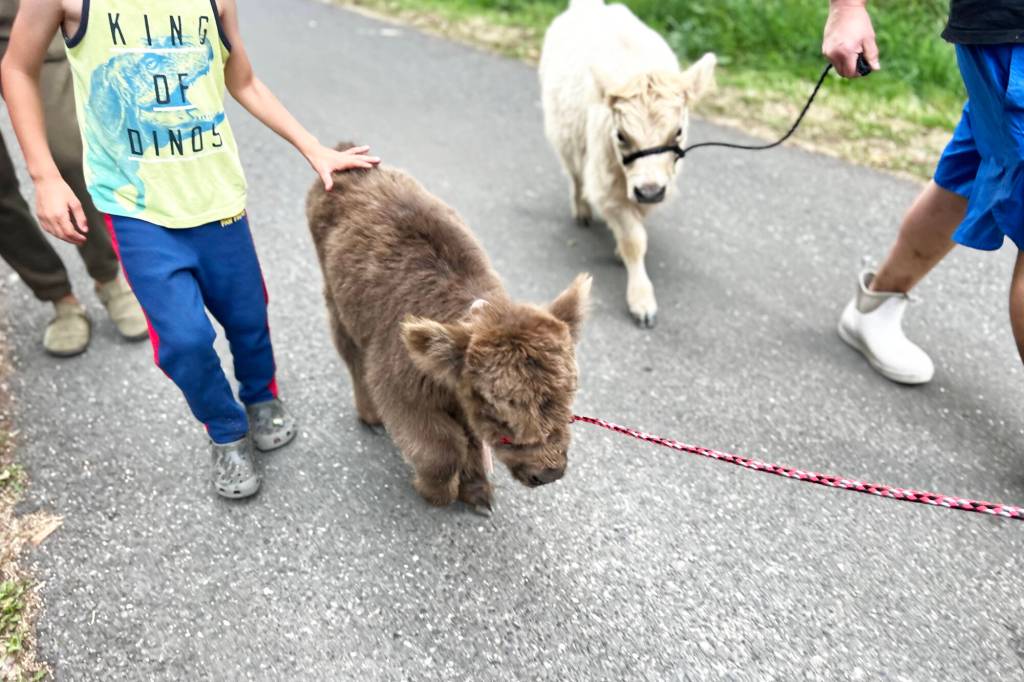
“Before the school year started, we purchased some baby cows that were located in Buckley,” said the founder and director of Heritage Farm School, a local Montessori academy. The cows were due to be picked up a few weeks ago, but the closure threw a wrench into those plans. “[And] because of the heat, the cows weren’t safe to drive in a truck for a long period of time… so we just made the decision to walk them across the bridge.”
Named Daisy and Darla, the micro-mini Scottish Highland cows from Rocking L Ranch will be a part of the school for students to pet and bottle feed once they’re clear of quarantine in a week or so.
Admittedly, this cow crossing is probably an extreme anomaly; it’s far more typical to spot more PNW-based fauna along the trail.
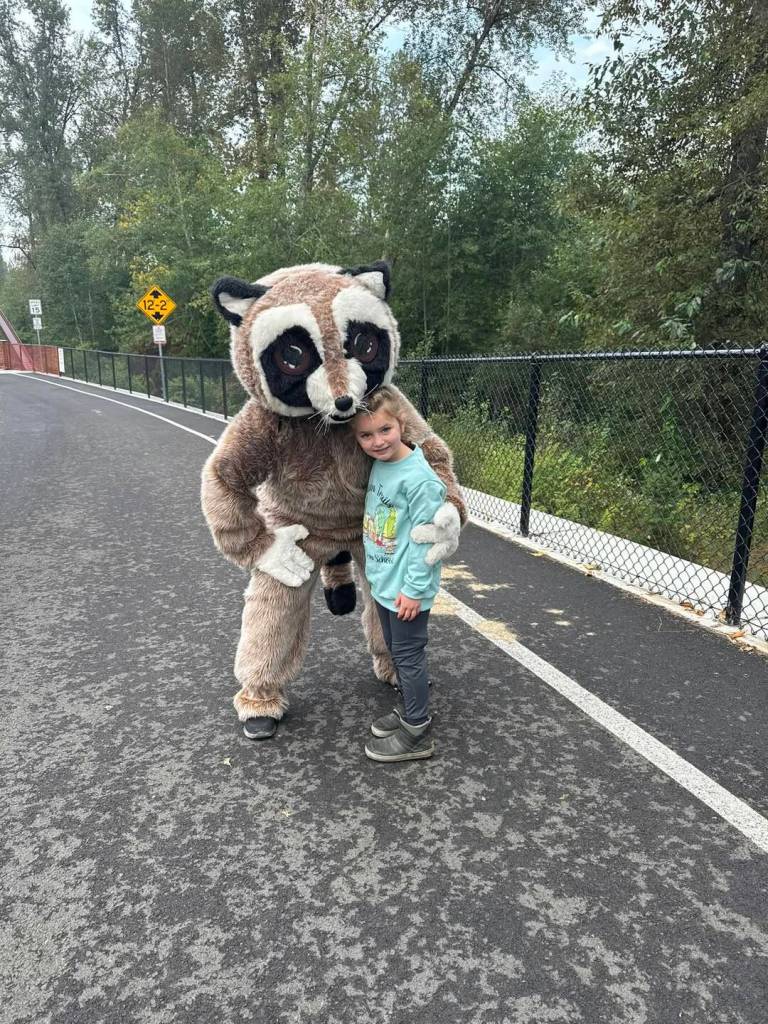
April Gihring and her daughter Abby were treated to a ring-tailed surprise when they were picking up students across the bridge for a day at Hidden Trails Forest & Farm School, which Gihring runs.
(I’m noticing a pattern here.)
“Our mascot is a raccoon, but we just happened to find that one while we were walking over the bridge,” she said. “It was just somebody just dressed up like a raccoon. I’m tempted to buy a raccoon suit now. It was a complete coincidence.”
Abby was “thrilled” about the five-foot-something mammal because she and her classmates recently helped rehabilitate some raccoons before they (the raccoons, not the kids) were released onto Gihring’s ten acres.
“They thought it was amazing and so excited to be apart of the process in putting them back into the wild,” Gihring said, adding they’ve since disappeared when the salmon started swimming upstream.
Salmon? That sure explains the smell at the Enumclaw edge of the bridge.
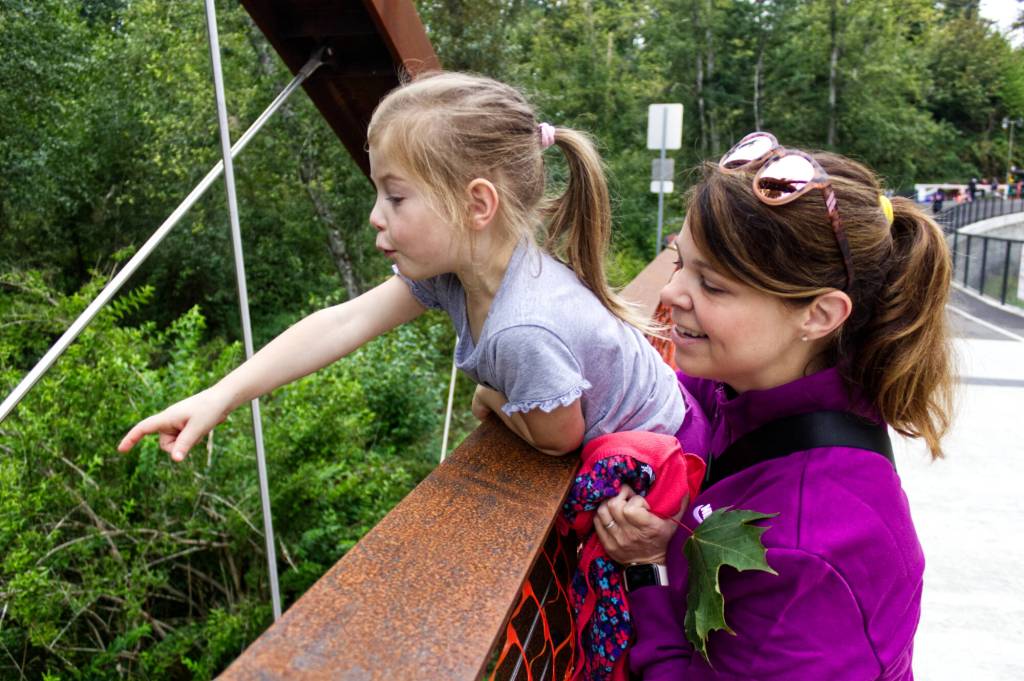
Haley noticed it on her way to work the other day, and brought her daughter back to experience this olfactory offense.
It was salmon — dead salmon to be exact — that were raising a stink, but many more were struggling to make their way up Boise Creek to their spawning grounds.
Evelyn, who was being held up by her mother for a better view of the creek, excitedly pointed out the live fish as they occasionally put on a burst of speed to make it past the rocks and weeds.
“I see a big one!” she yelled.
Evelyn said fish were her favorite animal, but I suspect she’d say that about any animal that crosses her path.
Boise Creek is extremely important to migrating fish. It’s chinook in the fall, but also steelhead, coho, pink, and more chinook in the spring as well.
It’s hard to determine how many salmon use Boise Creek, but the city spent the last several years improving their habitat near the Enumclaw Golf Course by rerouting the river from going through the course (which caused flooding issues in the winter) to along the forest line, providing them more shade, food, and areas to rest — all critical for migrating salmon.
However, a 2016 Annual Salmon, Steelhead, and Bull Trout Report from the Puyallup Tribe noted that the Boise Creek is a “highly productive tributary” that, among other achievements despite its size and limitations, “continue[d] to support returns of wild steelhead, a remarkable fact in light of the basin-wide decline over the past decade” and “exhibits the highest steelhead redd density found anywhere in the watershed.”
(Steelhead redd refers to the nest created by female steelhead fish.)
Since then, multiple improvements have been made to the stream, including re-routing it through the Enumclaw Golf Course from flowing between holes (which caused massive flooding issues in the winter) to along the forest line, providing the salmon the critical shade, rest areas, and food they need to make it to their spawning grounds — so there’s hope to see further gains in salmon spawning in the future.
After I got tired of the smell, I looked up to see an eagle flying just above the treetops, perhaps looking for an aquatic snack; behind me, I could hear songbirds celebrating the end of summer.
The bridge is a lifeline between Buckley and Enumclaw — but it also puts us straight into the middle of the natural wonder that is Pacific Northwest.
Once this inconvenience is behind us, I hope more people can slow down and enjoy it, all year long.