
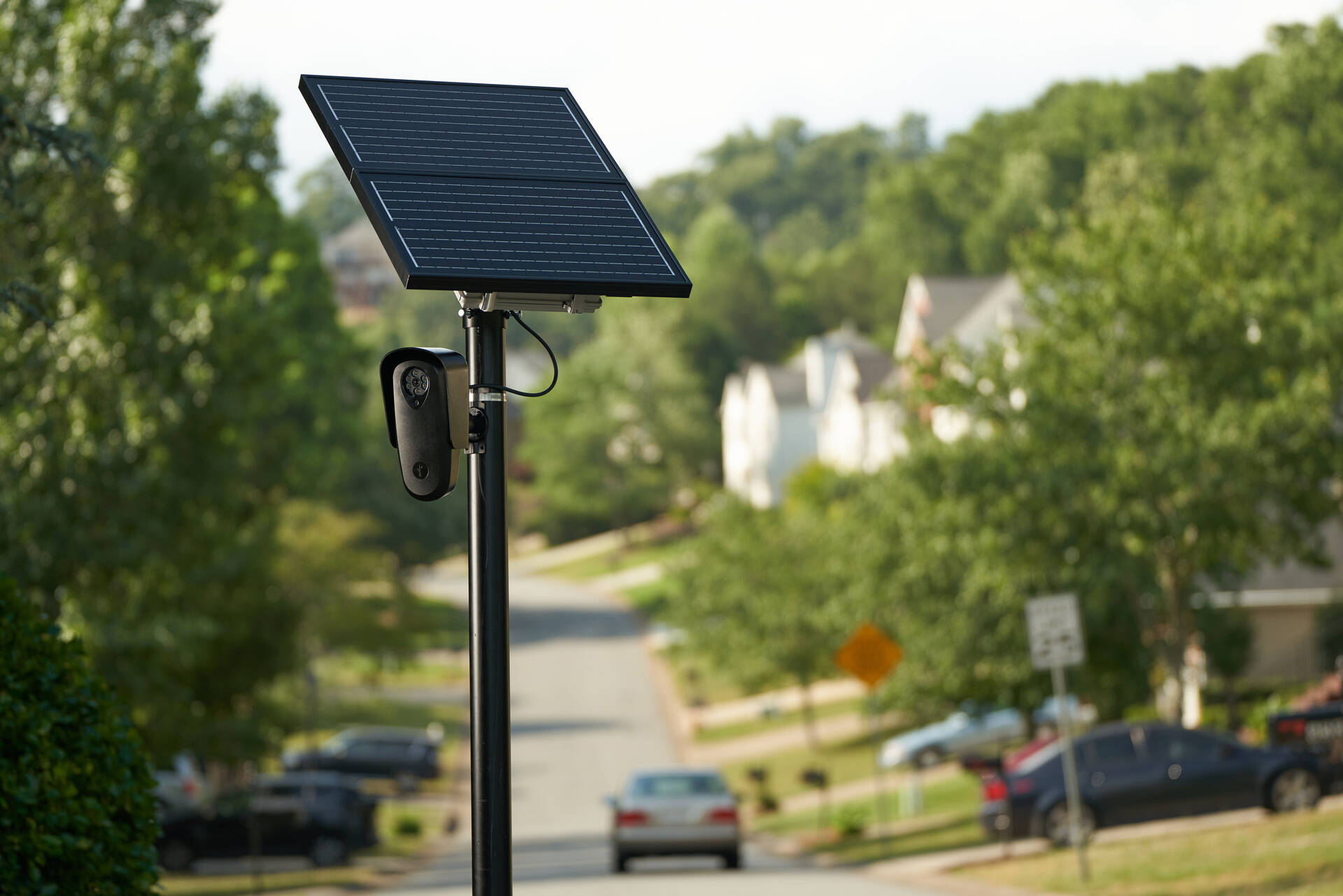
The city of Enumclaw just passed an automatic license place reader camera policy.
The city council approved the policy during July 28 meeting. This is not a contract with Flock Safety, an automatic license place reader (ALPR) provider that has been working with the city to explore camera use.
“The passage of the ALPR policy was a huge step in the right direction to further the acquisition of technology that will ultimately make our community safer and increase officer safety within our jurisdiction. Flock Safety ALPR cameras have proven time and time again to be a valuable tool to recover stolen property, develop investigative leads and find missing or endangered people,” Enumclaw Police Chief Tim Floyd said. “The Enumclaw Police Department is looking forward to having technology commensurate with the jurisdictions that surround us, so that we can partner seamlessly with our neighbors in our crimefighting efforts and provide a high level of customer service to our community.”
For those who don’t aren’t familiar with automatic license plate readers, think about HOV and toll bridge cameras that have been in use for decades.
These cameras would be very similar and would take pictures of back license plates and collects information like the make, model, color of a car, plus any damage or alterations to the vehicle.
These pictures are stored in a Flock database for 30 days. If a vehicle is flagged as possibly being involved in a crime, officers get a “hit” on the location of the car. The “hit” could be for a specific department or area-wide, if the crime was determined serious enough.
The cameras do not collect any facial data or track traffic infractions like speeding. Additionally, unless a vehicle is flagged, the pictures are hard deleted from the database and cannot be recovered.
The purpose of the cameras is to help police officers respond quicker to a crime if it just occurred or provide officers more leads if a crime goes unreported for a time.
An example for the former, Enumclaw Police Chief Tim Floyd has said, was when an Enumclaw liquor store was robbed earlier this year.
The suspect escaped with $5,000 and officers were unable to locate the car.
However, had the driver passed Enumclaw ALPR cameras, Floyd said the EPD could have use the security footage of the robbery and use Flock’s database to search for similar cars and get “hits” for when and where the suspect vehicle was at one point in time.
Additionally, the department could continue to get “hits” from even if the vehicle went to another city; most South King County cities like Black Diamond and Auburn, plus Bonney Lake and even Yakima County on the other side of Mount Rainier National Park use Flock ALPRs and are connected to the same database.
This means that if Enumclaw officers were unable to arrest the suspect immediately, another agency could make an arrest later.
A hypothetical example Floyd has given for the latter is if a home is burglarized when a family is on vacation and comes home days or weeks later. If a suspect vehicle is caught on a security camera, officers can put that vehicle information into the Flock database to receive “hits” and other information.
“There’s a net of Flock all the way around Enumclaw. We’re a hole in that net,” Floyd said in a previous interview.
Other benefits to ALPR cameras include locating vehicles involved in AMBER or Silver alerts.
While Floyd has been pushing for using ALPRs and the majority of the council has signaled support, Council members Chris Gruner and Bobby Martinez have opposed the cameras, citing privacy violations and the potential of abuse, not by the EPD but the state or federal government.
Gruner and Martinez’s concerns have been echoed by residents on social media, where it appears far more people are against the prospect of using these cameras than those who support them.
One such person is Brodie Smith, who is challenging Council member Tom Sauvageau for his seat.
“[The] less evasive police state monitoring, the better,” he said in a recent Q&A with the Courier-Herald. “We already live in a time where every movement is monitored with cameras… I understand the positives this can provide for police investigations. However, my main concern is how this may be abused in the future.”
In contrast, Sauvageau said the “the need to balance our rights for privacy with our needs for public safety” is a “touchy subject,” but he saw firsthand how ALPRs have help officers; during a police officer ride-along in Kent.
…[W]ithin several hours we picked up a stolen vehicle which ended in (I kid you not) guns-drawn, down on the ground, high tense drama,” Sauvageau said. “… I thought that was a rare occurrence for police, but [the officer] explained that with the license plate readers the results for finding suspects were much higher and therefore it was a very common occurrence to have 2 or 3 of these kinds of gun’s drawn situations every week.”
Sauvageau added the ALPR went off again later and resulted in a high-speed chase and guns-drawn situation.
“…[T]here is no doubt in my mind that this will help keep our community safer and give police officers more ability to keep bad guys off the streets, I have to side with supporting ALPR’s on the 410 highway,” he said.
The city council is currently in the middle of planning the 2026 budget, so it’s unclear if funds will be made available to contract with Flock at this time.
However, it’s expected to cost $30,000 for eight cameras, two positioned at SR 167 and SR 164 each, and four on SR 410, and installation the first year, and then $24,000 every year after.
SAFETY PRECAUTIONS
The city’s proposed ALPR policy includes five privacy protection stipulations.
One is quarterly system audits, and other is mandatory case number logging for all searches. This means the EPD can track which officers are conducting what searches. Audits will be conducted by Operations Commanders Tony Ryan and Josh Hong.
Additionally, Floyd said that elected officials are invited to observe the audit “to show how often and why the system is being used.”
Officers are also prohibited from accessing the Flock database on their personal devices.
“I felt that was a good caveat to adopt for EPD to further delineate that Flock ALPR is for law enforcement investigation purposes only,” Floyd said.
The policy also bans the use of ALPRs for any sort of civil infraction enforcement or private third-party sharing.
Finally, while data collected is not available to public review due to the possibility of revealing confidential information, an online “transparency portal” will be created for the public to see which agencies the EPD shares information with; how long the department retain data; and how many license plates read, searches performed, and hits received in the previous 30 days.
An example of the portal can be viewed at transparency.flocksafety.com/puyallup-wa-pd