Here are the options WSDOT is exploring to potentially re-open SR 165 and the Fairfax/Carbon River bridge
Published 11:00 am Friday, May 30, 2025
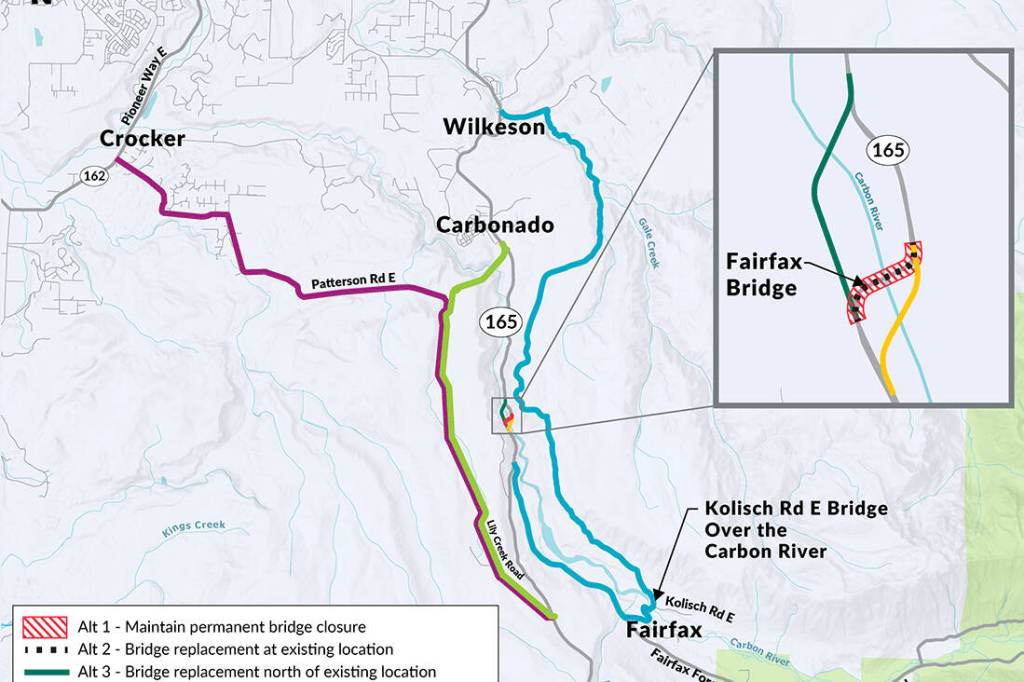
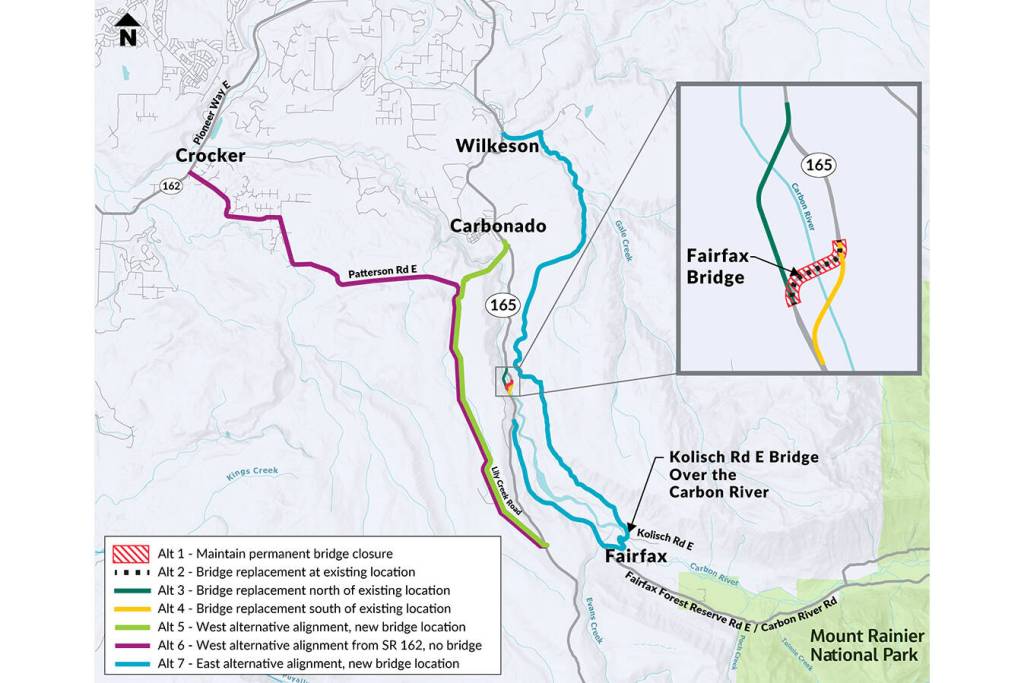
The Washington State Department of Transportation is presenting three options for how to go about the recent closure of SR 165 at the Fairfax/Carbon River Bridge.
The bridged was permanently closed April 22 when inspectors discovered new deterioration of steel supports across the bridge, including a bent support column.
Closing the bridge means there’s no more SR 165 access to Mount Rainier National Park’s Mowich Lake Entrance, the Carbon River Ranger Station, and other outdoor recreation area.
Opening the bridge anytime soon is highly unlikely, as WSDOT has said there are no current funds to replace the bridge.
But the department is hosting two open houses to present potential options.
One is Monday, June 2, but if you miss that one, the next is June 11, 5:30 p.m. to 7:30 p.m. at Wilkeson Elementary School.
And if you can’t make that either, you can still go to the online open house at engage.wsdot.wa.gov/sr-165-fairfax-bridge.
Being studied are three general proposals, each with their own sub-proposals.
Overall, the options are replacing the bridge, finding an alternative alignment to reconnect SR 165, and do nothing.
The “do nothing” options is a bit of a misnomer, as if the bridge remains closed, the state will remove it.
This would cost the state an estimated $35 to $50 million, and the removal would take about three years — after funding is received. There’s no timeline on when funds may be made available.
That’s the cheapest of all the options available as they get more and more expensive as the list goes on.
WSDOT encourages people who live near or otherwise utilize SR 165 and the bridge to comment on the options presented, either in person or on the online open house.
BRIDGE REPLACEMENT
Replacing the Fairfax/Carbon River bridge is no mean feat.
Options for replacing the bridge start with building the new bridge where the old one stood.
This could cost upward of $80 to $130 million and could take six years or more after funding is acquired.
The other two considerations including building a 650-foot bridge to the north or south of the old structure. (The previous bridge was 494 feet long.)
These options are cheaper than replacing the current bridge, with an estimated price tag of $60 million to $100 million each.
However, both options would still require the new bridge to come down first, so the six-year estimated timeline stands (again, after funding is cemented).
All three options come with the key consideration of difficult construction access.
REALIGNMENT
Now we’re talking big bucks.
Realignment proposals include completely changing up how drivers would get about crossing the Carbon River by creating alternative routes out of Wilkeson, Carbonado, or the city of Crocker.
The first option is out of Carbonado.
Drivers would still go south, although on the west side of SR 165, following Lilly Creek for about five miles until the road reaches an existing portion of SR 165 on the other side of the closed bridge. The new bridge would be about 1,400 feet long.
This option comes with a five-year estimated timeline after funding, but the cost is between $465 to $785 million.
The second alternative comes out of Croker, connecting SR 162 to SR 165. The road would go east from the city to Lilly Creek. It would then follow the same path as the previous proposal along Lilly Creek until reaching SR 165 for a total of 11 miles.
This option does not require a bridge, which somewhat reduces the estimated price to between $440 to $735 million. This could take up to seven years to complete, after funding.
The final option realigns SR 165 with Wilkeson, and includes two bridges.
The road would first go east of the town, using a bridge to cross the Wilkeson creek befire going south, generally parallel to the current highway. Drivers would head toward Fairfax, where an upgraded Kolisch Road bridge would greet them. The road then doubles back north until it reaches SR 165.
The total length of this road is 12 miles, and the total estimated cost comes in at $375 to $610 million. The estimated construction times comes in at six years after — you guessed it — funding.