
By Jessica Keller
The Courier-Herald
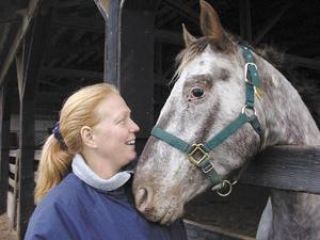
Michelle Norstrom, owner of Huntington Farms in Enumclaw, is one of the lucky people who can do what she loves to help others - in her case, horses.
Norstrom is the foster mother for 30 horses, 15 mares and 15 foals, which came from a Pregnant Mare Urine farm in Manitoba, Canada. Norstrom is keeping these horses through her work with United Pegasus Foundation, an organization that helps find homes for out-of-commission race horses and now PMU foals and mares.
"I was very blessed to be able to do my passion in life, so to be able to help is great," she said. "I just do what I can."
According to the United Pegasus Foundation Web site, the group began rescuing foals from PMU farms, farms used specifically to breed horses so the urine of the pregnant mares could be collected to extract a hormone used to make Premarin, a hormone replacement drug that eases the symptoms associated with menopause. The name Premarin, in fact, is short for pregnant mare urine.
According to the Web site, there are approximately 450 PMU farms in Canada and the northern U.S., with about 50,000 to 60,000 foals produced every year. Of those foals, about 80 to 90 percent of them wind up going to slaughter houses because there are too many to place in a well-saturated horse market. The mares are bred repeatedly, until they stop producing, and United Pegasus Foundation contends, the way they are used is cruel.
In addition to the number of foals produced from PMU farms, there are a number of displaced pregnant mares because Wyeth, the maker of Premarin, canceled the contracts of more than half of the Premarin farmers, leaving a number of mares, some pregnant, displaced because of the drain they placed on the farmers.
The luckier foals and mares rescued by United Pegasus Foundation wind up at various farms in the United States like Norstrom's so they can be adopted.
Norstrom, a breeder of sport horses, said she stumbled on the Pegasus program while surfing the Internet one day a couple of years ago. She was interested in what they were doing, and looked into PMU farms. By the time she concluded her research, she decided to adopt five foals.
Norstrom has adopted horses ever since, and last year she bought pregnant mares, which otherwise would have been sent to a slaughterhouse, that she foaled herself.
"I didn't want to see both mom and baby get whacked off, so I bought three," she said.
Instead of adopting foals or mares this year, Norstrom told the person in charge of the Pegasus Foundation she would be willing to help provide foster homes for displaced horses at her Enumclaw farm. She received 34 horses, 17 mares and 17 foals in the shipment - four of which she has found homes for.
"I don't think hormone replacement therapy is worth killing an animal over," she said. "I think everything deserves a chance to live."
The horses stay on her 40-acre farm, a private facility that also boards race horses. Of the horses she received this year, she has begun to work with a few of them, leading them and walking with them. She has even put a couple of them on the hot walker, basically to help them get comfortable with human interaction, which they did not have before, as they were just a product of a business.
"Before, they would run away from you, now you can groom them," she said.
Norstrom said people have many misconceptions about the horses because they are not papered and were not well treated before.
She said a lot of people, think the horses are a lot harder to train, but she says they're not. She also said another misconception is the horses are very bad, ugly, mean or unhealthy.
"They're not papered but a lot of them have very good hearts," Norstrom said.
Snickers, an 8-year-old Appaloosa is one of the PMU mares Norstrom has gotten attached to, although she is looking for a home. Norstrom said, however, she is going to be very careful where the friendly and loving Snickers is placed.
"She is just a grand lady," she said. "It's hard to let them go; you get very attached to them."
She and her trainer try to work with the horses at least 10 minutes a day, although they specialize with the babies because they are easier to train and socialize.
"The less trauma they have when they're young, the less likely they are to look at us as wicked animals," Norstrom said.
She said one of the challenges with the horses is figuring out what they will be good for. She said while some are good for driving, only a few are good for dressage or competitive sports. Most, however, are good for pleasure riding or "lawn ornaments," Norstrom said. However, she said whether they become drivers or ornaments, the horses are still better off than where they came from.
"Basically they were treated like cattle," she said. "They've never really had any positive experience with humans before this."
While Norstrom is keeping and providing for the PMU horses, they do not belong to her, except for the ones she purchased outright. She describes the horses as being on consignment, and the payments for any horse purchased go to pay the PMU farmer the horses came from. She also sponsors horses, and the sponsors pay for the food and upkeep of the horses that remain on her farm.
"But hopefully, I can find homes for all of the horses," she said, adding if the mares she is housing are pregnant, she will foal them and care for the babies until they can be adopted too.
"It's part of my gift to the people adopting them," she said.
Norstrom said she is happy to provide a home, even a temporary one, to the horses because they are very special animals and special to her.
"There's nothing better than waking up in the morning and seeing all those horses. It's incredible."
But Norstrom hopes to find homes for all of this year's horses, and she hopes many of the horses can be placed in happy homes on the Plateau.
For more information on PMU foals and mares, or to contact Norstrom about adopting or sponsoring a foal or mare, people can visit the United Pegasus Foundation Web site at www.unitedpegasus.com. Norstrom's phone number is listed there.
Once an interested buyer contacts her, Norstrom said she will begin the interview process to make sure the horse and the owner are good matches. Making sure the horses are placed in a good family, Norstrom said, is the most important thing to her.
"They are so deserving," she said. "They need homes, and we need all the help we can get."
Jessica Keller can be reached at jkeller@courierherald.com.