POW shares memories at Street Fair
Published 10:23 am Thursday, December 11, 2008
July 25, 2007
By John Leggett-The Courier Herald
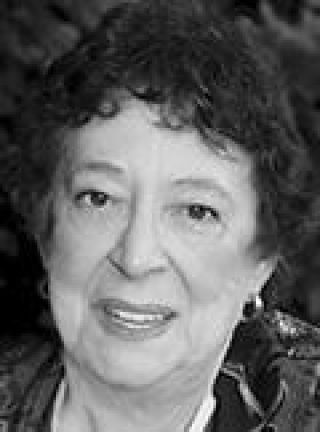
Alice Peeples still wakes up in the middle of the night haunted by the faces and events experienced during her years as a slave in a Japanese prisoner of war camp.
Peeples, 74, worked for Rainier School in Buckley as a civil rights advocate from 1980 to 1997. Even as a Lakewood, Wash., resident she continues her membership with the Enumclaw Rotary Club and attends meetings regularly.
What many in the Plateau area may not know is she was held captive, along with her mother, from 1941 to 1945, and has detailed her trials in a book, “Child P.O.W. - A Memoir of Survival.”
The recurring nightmares give way to something much more pleasant.
“When I awaken in this house that has been in my family for decades it always conjures up so many happy and fond memories, especially of my mother, who was truly an angel on this earth, I am always comforted,” Peeples said of her Lakewood home.
“When I finally decided to write this autobiographical book it was much harder than I expected,” she said. “I wanted Americans to know what went on over there during World War II, though. I was in a POW camp, so I know what happened, because at least some of it happened to me.
“Sometimes I would just sit in front of my computer keyboard and weep uncontrollably for hours as the memories came rushing back,” she said. “I would have to do a restart later in the day, pick myself up and start typing again.”
She wrote the book under her maiden name, Finch.
“My mother and I had gone to Manila to visit my Aunt Alice, who was an army nurse stationed there at the time,” Peeples said. “I developed polio nearly as soon as we got there and was not allowed to be transported back out of the country. Doctors didn't know as much about how the disease was transmitted back then. They didn't want me using public transportation to exit the country for fear that I would transfer polio to the general public.
“It took me a long time to understand that the horribly demeaning things my mother and I were forced to do over there, we did because we had no choice,” she said. “We were slaves in an officers' POW camp, and the Japanese officers told us straight up, that if we didn't do exactly what we were told to do we would be killed. They used to tell us that we were lucky to be serving the officers and that we should appreciate the chance we had been given. That there were a lot of other girls waiting in line just for the chance to be put where we were.”
“Even though I was only 8 years old, I remembered a lot of things about the camp, but what I remember most, was how incredibly frightened I was all the time and the brave and caring American soldiers, who were captives there along with us.
“Most of the captured American soldiers were made to work in the coal mines under belittling, demoralizing conditions and as the war was nearing an end, most of them were killed because it was a CYA situation for the Japanese command. They didn't want any of our soldiers to come back to the United States and attest to how poorly they had been treated,” Peeples said. “Most of us agreed that we didn't mind dying, just not there in that hellish, miserable place.”
Through efforts by the Swedish Red Cross, Peeples and her mother managed to get back to America in 1950. Peeples remembers six weeks later America dropped the bomb on Hiroshima.
Peeples, who has been married twice and is a widow of her second marriage, maintains that despite the earlier strife she endured, her life has been good, and that she counts her blessings every day.
Another thing she does everyday is try to find it in her heart to forgive the Japanese soldiers.
“All of the degrading memories are so fresh in my mind, it is as though it all happened yesterday. Sometimes my abilities to forgive are a little bit sluggish. I guess that is just part of the human condition,” Peeples said.
John Leggett can be reached at jleggett@cmg-northwest2.go-vip.net/courierherald.