Transportation District drafts 0.1% sales tax to address roads funding shortage
Published 1:10 pm Monday, March 23, 2026
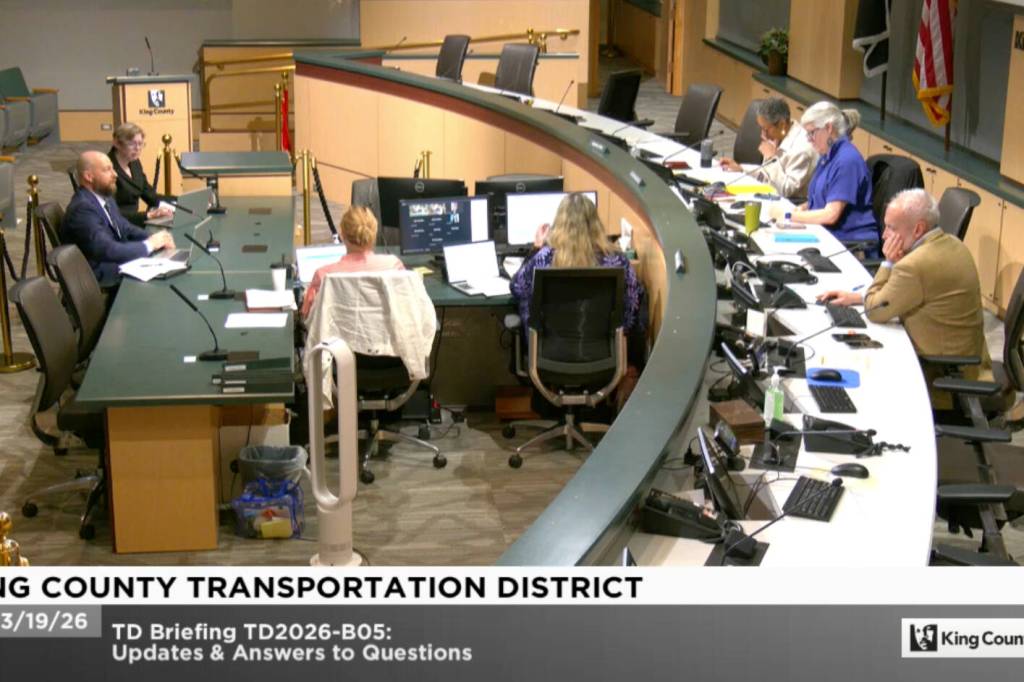
The King County Transportation District has officially introduced a resolution to increase sales taxes to mitigate the county roads division’s budget shortfall and increase funding for unincorporated road projects and repairs.
The resolution was discussed during a special March 19 meeting.
The county’s Roads Services Division is facing a financial crisis — after running a $200 million budget shortfall for several years, Director Tricia Davis said it will have to eliminate its capital fund by 2028 if it receives no additional tax revenue.
In short, that would mean the county would be unable to maintain or repair unincorporated roads, hinder the division’s emergency responses, and delay or cancel bridge repairs or replacements.
This would likely affect the unincorporated areas around Enumclaw and Black Diamond: roughly 18% of all of the miles of roads the Roads Division is responsible for are in southeast King County, as well as nearly a quarter of all the bridges.
This includes the Boise X Connection Bridge on SE Mud Mountain Road; the county plans to remove the existing bridge this summer because it can no longer safely support the weight of commercial trucks and large emergency vehicles.
In total, the Roads Division is charged with maintaining more than 1,500 miles of road across the county, as well as the drainage pipes, guardrails, signs, and more alongside them.
The Roads Division operates with a $129 million budget and a $25 million capital programs budget, bringing its total budget to about $154 million.
SALES TAX INCREASE
A potential solution — a partial one, at least — is for the Transportation District to use its taxing abilities to unilaterally impose a 0.1% increase in county sales taxes for ten years without having to go to the voters.
At this time, the Roads Division is solely funded through county property taxes and grants.
Approving this tax increase to increase funding would be the first time the Transportation District (a special tax district that is independent from the King County Council) has ever used its taxing powers; voters rejected a 0.1% sales tax increase and a $60 vehicle license fee measure in 2014, when the district was first formed, and no other attempt was made since.
According to a county staff report, increasing sales taxes by 0.1% would result in an additional $102 million per year — which only covers half of the budget shortfall.
It’s estimated that the impact to a median-income household ($122,000) is about $40 a year.
A tentative meeting date to continue the conversation has been set for April 2.
If the Transportation District does approve the increase, it also has to consider whether it wants to contract with King County to use the revenue, or if wants to be assumed into King County and no longer be an independent taxing district.
At this point, it’s unclear how projects would be prioritized, since the sales tax increase doesn’t cover the entire budget shortfall; council staff said the Transportation District and the King County Council will need to work out the details of how they will partner in the future before project prioritization is considered.
GO TO THE VOTERS?
A 0.1% sales tax increase only and the estimated $102 million in additional tax revenue only covers half of Road Divisions’ annual budget shortfall.
Additional options that have been brought up include the Transportation District going to the voters for up to a 0.2% sales tax increase; each 0.1% increase could increase tax revenue by an additional $102 million or more.
Another is increased license fees: the Transportation District could enact a vehicle license fee of up to $50 without voter approval, or up to $100 with voter approval.
Tax revenue estimates come in at $15.5 million for every $10 in vehicle license fees, so a full $50 fee could bring in upward of $77.5 million.
Finally, King County could also go to its voters for a levy lid lift.
State law limits property tax revenue increases from year to year with a cap of 1%, so as assessed property values increase and more homes are constructed, the King County’s property tax rate must decrease over time in order to balance out the equation; a lid lift is the only way to increase the property tax rate.
No legislation has been drafted for these four options.