ESD selects Dr. Wenzel as new superintendent
Published 2:00 pm Friday, May 15, 2026
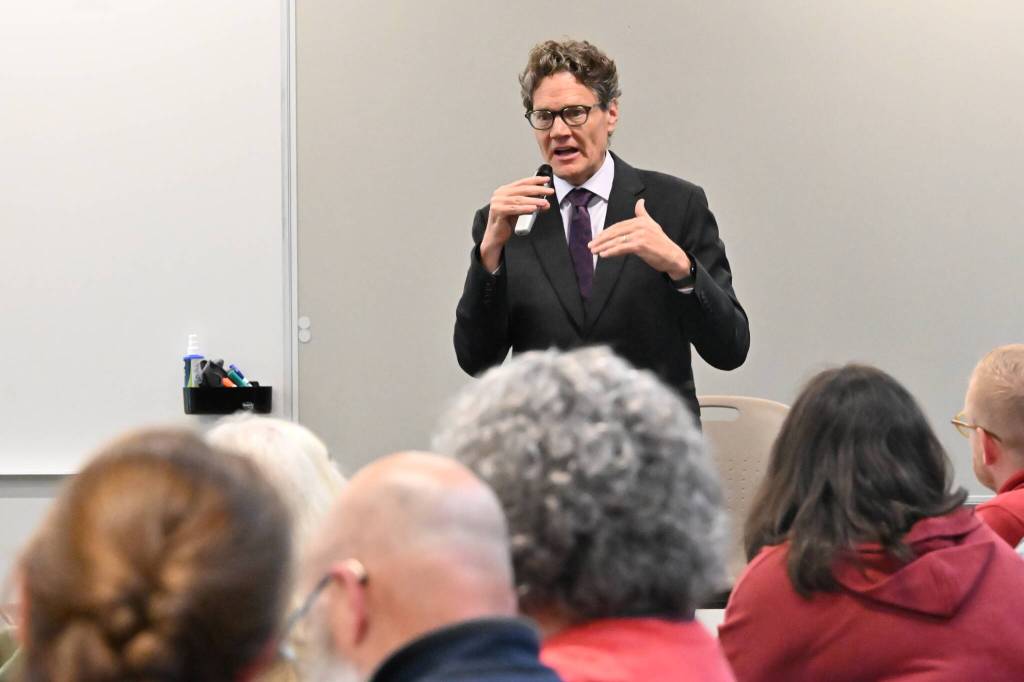
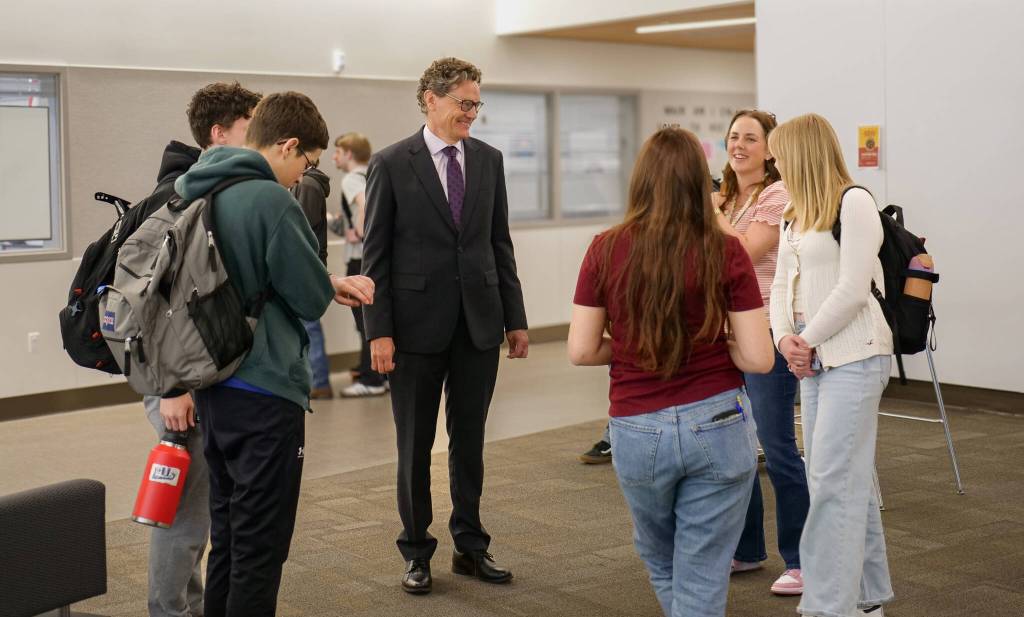


The Enumclaw School District just selected Dr. Mark Wenzel as its next superintendent.
The announcement was made May 14 after Wenzel and the other candidate finalist, Kent School District Superintendent Dr. Wade Berringer, spent two days of extensive interviews with the ESD Board of Directors and school staff, lunches with students, and public forums.
The decision to give the district’s top job was unanimous by the school board.
“Selecting a superintendent is one of the most important responsibilities of a school board, and we approached this decision with great care,” said Board President Tyson Gamblin. “Dr. Wenzel brings extensive superintendent experience, a strong background in community engagement and a clear commitment to teaching, learning and organizational leadership. We are excited to welcome him to Enumclaw School District.”
That extensive experience includes being the superintendent at the Menthow Valley School district in 2008 and at the Anacortes School District from 2013 to 2020. Most recently, he served in a leadership role at the Cognita Asia Schools Group and was superintendent of Stamford American International School in Singapore for the last four years. He was also the regional director of education overseeing instructional quality and leadership development across schools in Singapore, India, Vietnam, Thailand and Hong Kong.
Before these positions, he began his career as a teacher and the communications director for the Bethel School District.
He holds a Doctor of Education in Educational Leadership from the University of Washington, a Master of Science from the London School of Economics, a Master of Arts from the University of Washington and a Bachelor of Arts from Earlham College.
A contract with Wenzel will be considered at the May 18 board meeting, after print deadline.
Wenzel had his forum with community stakeholders on May 13. Below is a summary of the questions asked at the meeting and his answers.
PUBLIC FORUM
What steps would you take to understand and adapt to Enumclaw’s close-knit, small town culture?
Wenzel said he asked the school board how to be successful in Enumclaw.
“‘We would see you in the Fourth of July parade. You’d be there representing our schools, and people would look at you, and they would know that’s our superintendent, and there would be a sense of pride in that,’” Wenzel said on the the responses was. “I really liked that response because I believe that’s what small towns are about.”
Wenzel compared Enumclaw’s sense of community with his time in Anacortes, which he said his family thrived in.
“[We] loved going to connections, going to charitable events, joining service organizations,” he continued. “… We seek that kind of small community… that’s an important part of how I would approach that.”
What specific strategies would you use to support strong reading instruction, and how would you help students who need targeted help?
Wenzel said that ESD has already seen “really good progress in” research-based literacy instruction, especially in its elementary schools, specifically because of its phonics program.
“I think that Enumclaw’s on the right track, and I think the data show that,” he said. “There’s been a marked improvement. Enumclaw has outpaced the state over the last four to five years in terms of the growth of readers, which is really encouraging data.”
He added that he would continue encourage a “culture of literacy” in ESD, because “there’s no better way to learn to read than read.”
What specific strategies would you take to address bullying and disruptive behavior?
Wenzel said one of the best ways to address bullying and disruptive behavior is to be consistent and have clear classroom expectations.
“What sometimes happens in one classroom is not accepted in another classroom… When you have that consistency, you see a reduction in behavior issues because it’s understood that this is the expectation across the whole school,” he said. “It’s about building a culture where there are expectations for how we show up, how we treat another, the language we use, the behavior we show, and that’s an important first step in creating culture where there’s a greater awareness and a greater responsibility by all.”
As a part of a related question later in the forum, Wenzel said early intervention is key to preventing harder-to-address issues in middle and high school.
“Children can grow and change, and with support, can be successful,” he said. “Our job is to make sure they have that support and empathy and structure to be able to make that change.”
What is your plan to support and retain quality teachers and staff?
Wenzel said his job as superintendent is to make sure teachers and staff feel supported.
He added that the COVID-19 pandemic set many school districts back on this.
“Over the last three, four years, we’re recovering, and some systems have done that better than others, but we’ve been through this kind of national, international trauma, and now we’re trying to get back on our feet and get to this place where we’re even better than we were,” he said.
Do address this, Wenzel said he would work to reduce obstacles teachers and staff encounter when it comes to teaching and supporting education so they can focus on students and their own professional development.
“I can tell… busy work drives you crazy,” he continued. “Let’s find a different way to approach this, so that you don’t have to do this, so that you can focus on teaching and learning.”
Another question later in the forum asked Wenzel about how he would improve trust between the central office and on-the-ground staff.
“Part of that is visibility, part of that is being in classrooms. Part of that is thinking about how you align your vision around where you want to go. Part of that is how you’re making decisions,” Wenzel said. “… My approach would be… to come in and really ask questions, try to understand that relationship better, and then think about that relationship holistically… and see how we might evolve that relationship for the benefit of students.”
How would you ensure district funds are spent transparently and are clearly connected to students outcomes and staff support?
Wenzel said when he first became a superintendent at the Menthow Valley School District, he had to cut the school budget by 5 to 10% due to the economic downturn.
He called it a “trial by fire.”
But “we built a model that really showed revenue and expenditures and showed where the decisions we were making impacted students learning,” he said, adding that he wants to continue having “very open conversation” about the district’s resources with the community.
What would you do to improve communication between the district and families, especially when parents feel unheard?
Wenzel said his time as a communications director really informs him on the best ways a district can communicate with its community.
“It’s about being visible,” he said. “It’s about getting out into the community, being known.”
He added that he wants to building on the district’s “strong communications effort” and continue to tell stories about students successes.
“We have to tell these stories, and we have to tell many, many of them,” Wenzel continued. “We have to help the community understand that we’re doing a great job of preparing kids for the future.”
What role should AI and technology play in our schools?
Wenzel said there’s polls showing teachers who use AI to be more efficient in the classroom, like developing lesson plans, saves them five to six hours a week, and that there’s promise in AI helping in personalized tutoring.
But “AI will never replace quality teachers. The big idea of what the research is saying is ‘quality education plus AI equals winning,” he continued.
The other part of the question, Wenzel said, is how do schools not let AI do the thinking for students, which will require coming up with thoughtful and consistent approaches for how the technology is used in the classroom.
How would you handle the budget challenges, including levy and bond needs, while keeping the community informed and involved?
Wenzel said he’s heard a lot about the Enumclaw School District’s community’s tax sensitivity, and that sensitivity across the state as many levies and bonds continue to fail.
He said when he passed bonds and levies in his previous districts, the district had “really focused, intentional, strategic efforts to bring community together.”
Wenzel added that it all comes back to the district’s relationship with the community and telling student success stories.
“It’s really about building a sense of pride and community, communicating the need, and then being really fiscally mindful about how much we’re asking for… and making sure we’re really mindful in being good stewards of those resources,” he said.