Black Diamond continues emergency services discussion
Published 1:30 pm Tuesday, August 26, 2025
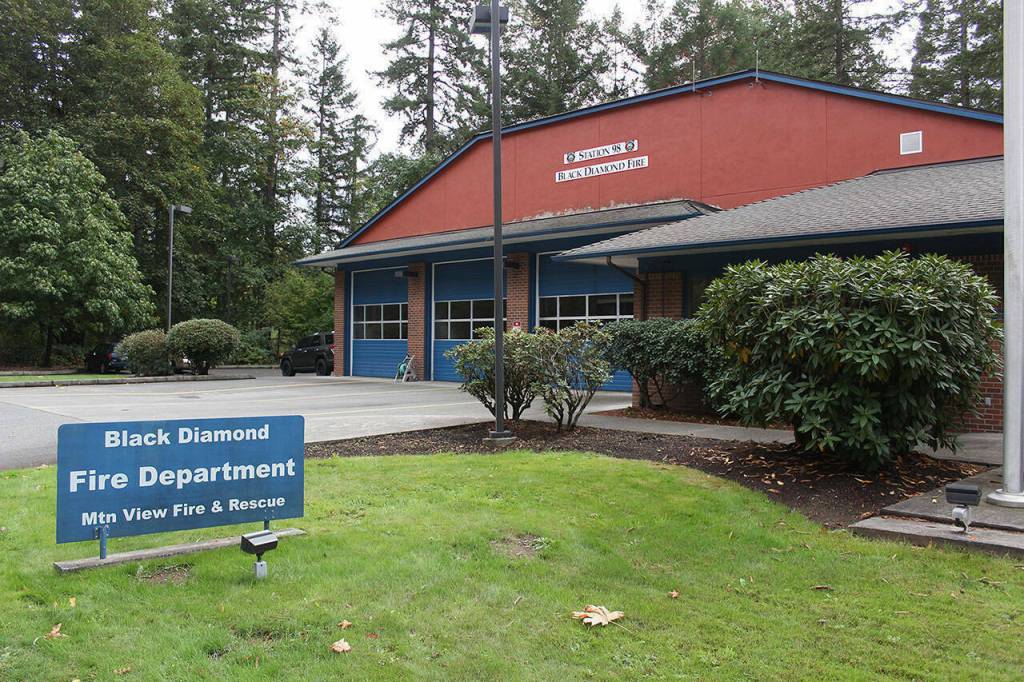
Correction: An earlier version of this article misreported that the council would discuss choosing an emergency service provider on Aug. 28. This was incorrect; the council voted to work with the Puget Sound Regional Fire Authority on Aug. 21. The Courier-Herald regrets the error and for any confusion the previous article caused. An article about choosing the Puget Sound Regional Fire Authority can be read here.
Elected officials had a lengthy — and sometimes heated — discussion at the Aug. 7 meeting about what department should serve city residents: the local agency, Mountain View Fire and Rescue, or the sprawling Puget Sound Regional Fire Authority.
First, some history.
MVFR, which has been serving Black Diamond for years, announced December 2024 that it would not renew its contract with the city when it expires in 2028; department commissioners said that the city was not paying enough for the services the department was providing.
“… we are unable to sustain the current level of services under the terms of the existing agreement,” a letter from commissioners to the city reads. “We remain committed to working with the City to annex the City into the District but do not believe further contract extensions are financially viable.”
If this all sounds familiar, that’s because MVFR gave notice that it was going to not renew its contract with the city in 2019 after years of negotiations. A new contract was agreed upon in 2021, with Black Diamond increasing funding from $571,000 to just over $1 million in 2022, and at least a 5% increase every year until 2028.
The city budgeted to pay MVFR $1.28 million this year.
Black Diamond first attempted to find another department to contract with, and was met with silence.
That left two options – form it’s own department, an extremely costly venture, or become annexed into a fire district.
Annexation would mean that city residents would be taxed by a fire department directly, instead of the city using its money to pay the department. Voters must approve annexation during an election with a simple majority.
Becoming annexed into either MVFR or the Puget Sound Regional Fire Authority will come with a property tax increase to residents, though there are differences to how wallets would be affected.
As of the last meeting, the council was split.
Council members Tamie Deady, Darcey Peterson and Leih Mulvihill all voted to work with the Regional Fire Authority to annex the city into its district, but didn’t have the votes.
However, Council members Sara Nielsen, Jesse Young, and Debbie Page also did not have the votes to work with MVFR.
The deciding factor in each vote was Council member Nathan Jones, the self-described “fence sitter” who wanted to have more information from the public before he made his decision.
THE DEBATE
Council members are split on many issues, but the largest is how residents will be affected by increased property taxes.
Annexing with MVFR would mean residents would be taxed an additional $1.50 per $1,000 in assessed property value.
For a $600,000 home, that’s an additional $900 tacked onto the property owner’s annual tax bill.
Annexing with the Regional Fire Authority would mean residents will be taxed $1 per $1,000 APV, but there’s is also a “fire benefit charge” added to this.
A fire benefit charge, the amount of which is controlled by the Regional Fire Authority and not approved through voters, charges properties on the size of homes, the ease of property access, and other factors that make fighting a fire at that location easier or harder.
This means same-sized homes with vastly different values would receive a similar fire benefit charge. Additionally, larger businesses would have more expensive fees than homes.
In general, the Regional Fire Authority’s property tax rate and fire benefit charge tends to be less expensive overall than Mountain View Fire and Rescue’s $1.50 tax rate, though the difference can be minimal to up to $100.
It’s those larger businesses and apartments that can be hit hard, paying hundreds of dollars more than what they would be taxed under MVFR.
Peterson and Deady both stressed that however much they may love the department that’s been providing Black Diamond emergency services since 2006, the best choice is the Regional Fire Authority.
“What is the very best decision for our long-term viability as a city and the services we’re going to annex into,” Peterson said. “It can’t be based on the people we know and love… Puget Sound has the economy of scale to do things we simply cannot do.”
Peterson also added that not only does the Regional Fire Authority’s funding model tend to save residents money, but it would also be resilient to an economic downtown and falling appraisal values.
““I know everybody’s worried about what it’s going to do to businesses, but a funding model that’s not dependent on the appraised value of homes is a better model,” she said.
“This is definitely a tough decision. And it feels personal. But I have to separate that and say this is a business decision, and this is a city I’m going to live in until I die… and I’ve got to figure out… and be the one to say what’s best moving forward ten years, 20 years,” Deady said, adding that the Regional Fire Authority is an internationally accredited department with strict emergency response standards, whereas MVFR is not accredited. “… Moving forward, it’s best to go with Puget Sound Regional Fire.”
But the council members supporting Mountain View Fire and Rescue are worried a fire benefit charge that affects businesses will discourage them from moving to Black Diamond.
“Right now, we don’t have a lot [of businesses]. And we want to get a lot. So to me, looking at this benefit charge on the commercial side, there’s a risk for businesses wanting to come in to Black Diamond because if we go through [the Regional Fire Authority], they’ll be paying a much higher cost than if we went to a flat rate with Mountain View,” Young said. “… I would just hate to inhibit our much-needed commercial sector coming in, because they think they’re going to be charged more.”
Page also said a more simple and predictable tax method through Mountain View would be easier to explain to residents, with the hopes that’ll lead to residents approving an annexation ballot measure.