WRHS students participate in national walkout
Published 4:30 pm Friday, January 23, 2026
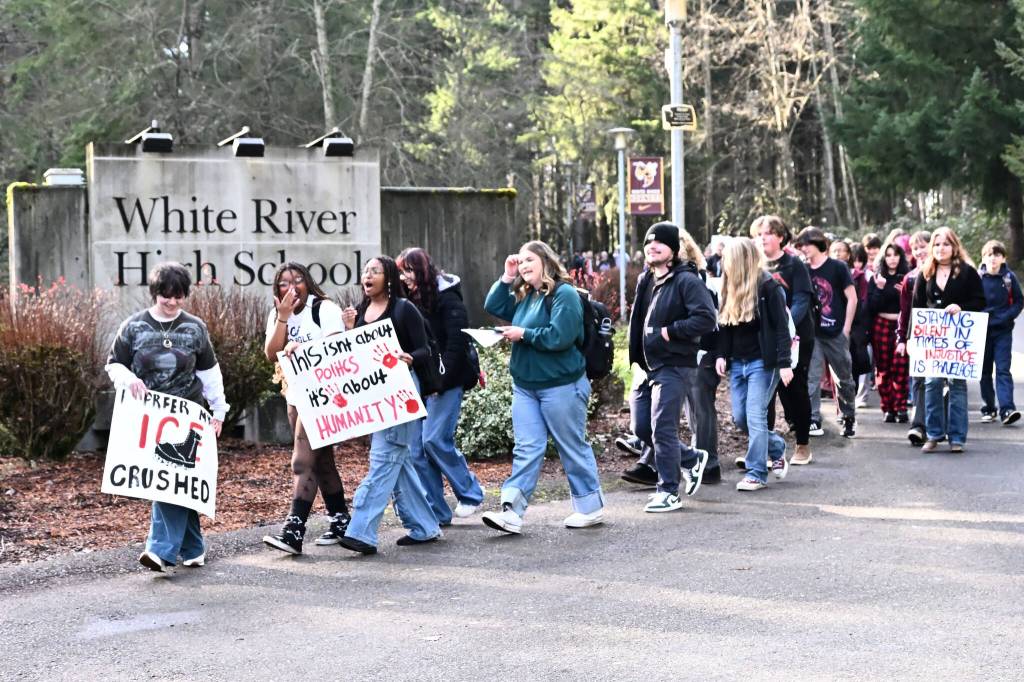
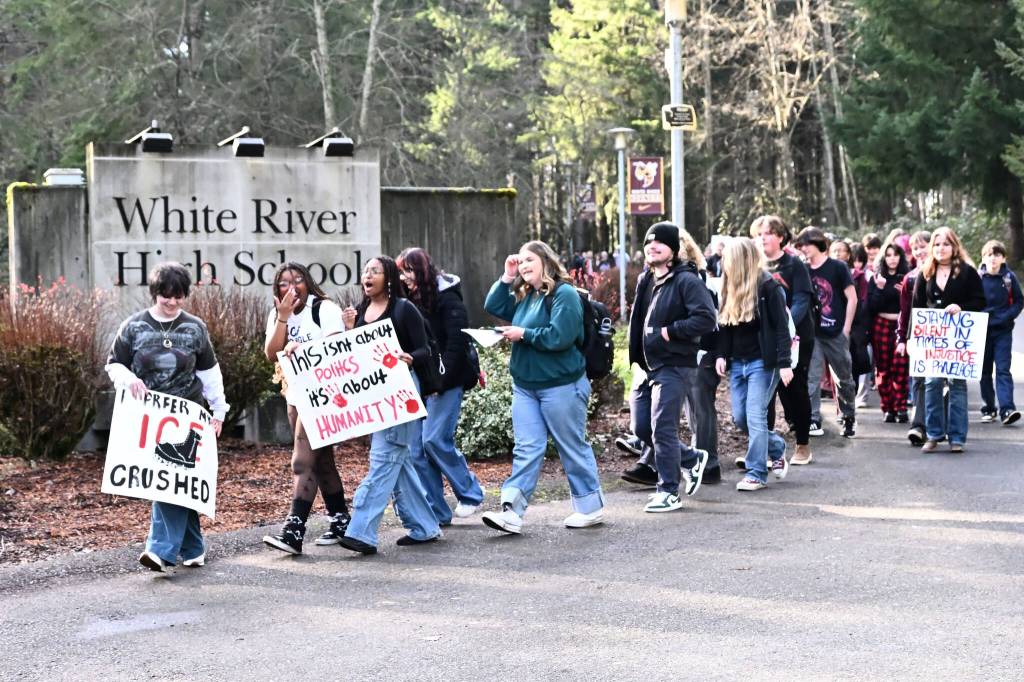
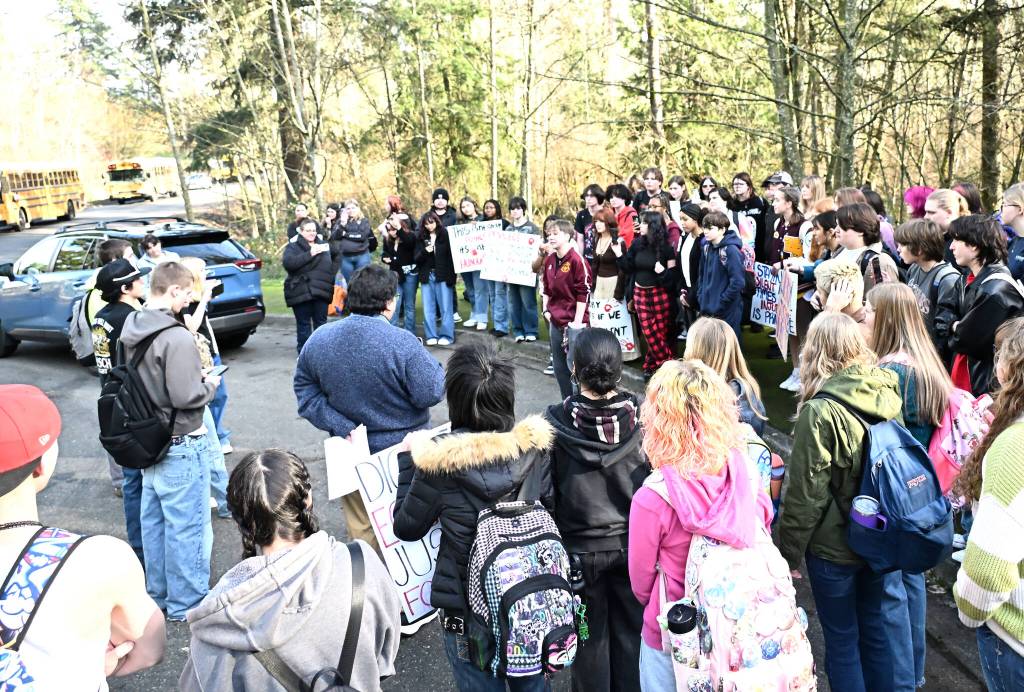
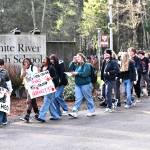
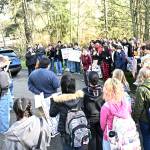
Close to about 75 White River High School students participated in this year’s nation-wide “Free America” walkout last Tuesday to protest the Trump administration.
While the event was originally focused on encouraging students to engage in democracy — especially through voting as soon as they are eligible — and to demonstrate “public dissent against authoritarianism,” it pivoted into an impromptu debate about Immigration and Customs Enforcement (ICE) when some counter-demonstrators became involved.
Hornet Sofia Gomez organized the event in cooperation with the White River School District; it was held just off-campus near the entrance of the grounds near the end of the school day.
“After coming together to fight for our democracy, I’ve realized that our actions, even if minor, have made an impact on our community,” she said. “Speaking with multiple students who participated, I’ve seen firsthand that not only did we send a powerful message to others, but we also empowered students to stand up for their beliefs and gain confidence in expressing their voices.”
The “Free America” walkouts, organized by Women’s March, took place on the anniversary of President Donald Trump’s second inauguration.
“One year into Trump’s second regime, we face an escalating fascist threat: ICE raids on our communities, troops occupying our cities, families torn apart, attacks on our trans siblings, mass surveillance, and terror used to keep us silent,” the nonprofit’s website about the walkout reads. “It is time for our communities to escalate as well.”
White River’s event began with a small speech from John Bratt about voting and participating in democracy, especially at the local levels of government.
“For a lot of people, a lot of youths that I’ve talked to before, the think participating in politics is mostly online — saying things, podcasts, debates, what have you,” he said. “But honestly, that’s all just for clicks and attention… the real meat of participation is a lot easier than that, and it’s a lot more substantial, and you have to understand the impact this group here can have, because not only do we need you on a national basis, but we need the input locally and statewide.”
Grant pointed out that in the recent mayor’s race in Orting was decided by 58 votes, and that none of the council seats in Buckley during the last election went unopposed.
“In all honesty, national politics does get all the attention, but its your local and state government where the rubber really hits the road and you really feel the impact,” he continued. “… You can make such a difference with just 75 people here.”
Gomez herself spoke about ways students could get involved in other ways outside of voting, including getting involved in the Washington State Leadership Board, the Washington YMCA Youth & Government program, the Washington Bus, and more.
“These programs matter because authoritarianism thrives when people feel disconnected and powerless. Civic engagement does the opposite. It builds knowledge, confidence and collective strength,” she said. “When students show up by organizing, volunteering, learning, and speaking, we help take care of the communities we live in.”
Unlike her predecessors, senior Kassidy Cox dove into politics and criticized the current federal administration, specifically its policies of mass deportation; despite the Department of Homeland Security repeatedly claiming that only “the worst of the worst” of undocumented immigrants are being deported, data shows that nearly three in four deportees have no criminal convictions, and only 5% have a violent criminal conviction.
“We all know what’s happening, whether we’ve herd it from social media, the news, or friends and family, and some of us, like me, are scared for the future and what it could bring. And we have every right to be scared — the situation is dire, but we cannot just bury our heads in the sand and hope it all goes away,” Cox said. “… The responsibility to change things is ours, and the time to act is now.”
AN ATTEMPTED DEBATE
The official speakers were through, but another student attempted to take center stage to support ICE and its deportation efforts.
“I respect what y’all are doing here, it’s just some of the things y’all stand for is corny as s***,” the student said; he was a part of a handful of other students who were clearly not a part of the walk out, but had other reasons for attending. “Some of the signs, bro. Like, what are we doing?
“… It’s quite simple,” he continued. “If you don’t belong here, get the f*** out.”
Unsurprisingly, discourse derailed. Brett helped the groups come to an agreement for the students and Cox to debate and rebut, but with other students continuing to interrupt and the end-of-school traffic making its way down the street, any real attempt at having a conversation was extremely difficult.
The student and his group left shortly afterward as the walkouts continued waving their signs at the passersby.
He did not return a request for contact after the event.