Gas prices vs. income taxes — which is better? | In Focus
Published 4:30 pm Monday, July 21, 2025




My wife and I are sick of flying. We decided to drive to Minnesota to visit her siblings rather than fly.
Driving takes longer, of course, but there are some real advantages to driving over flying. We did not have to find extended airport parking, or get to the airport two hours early, or go through TSA security checks, or be packed into seats like sardines in a can, or pay extra for seating or luggage and food, or rent a car and then later drop it off, or have delays due to technical or mechanical issues, or wait to get into a terminal to off-load. If you’ve flown, you know this list could be even longer.
We were able to see and experience the countryside, meet people along the way who think and speak differently than we do, stop and eat or rest when we wanted to, and bring more clothing and other items with us.
On this recent trip I reflected on several issues: the price of gasoline versus electric vehicles, and whether the state has income tax.
Washington has no income tax, but its current gas rates are now the third highest in the nation. We’ve been paying $4.59/gallon at Costco, less a 5% discount for being a member, which brings the price under $4/gallon.
Idaho has a state income tax which is 5.695% for 2024 on yearly income above $2500 for single filers or $5,000 for couples. We paid $3.37/gallon of gasoline after we crossed into Idaho.
We then crossed into Montana which has a graduated income tax. Rates vary between 4.7% and 5.90% depending on your income and tax status. Regular gasoline in Montana varied between $3.265, but I saw it as low as $2.95. We paid an average of $3.23/gallon.
North Dakota has a progressive state income tax that varies between 0% and 2.5% depending on your income level and your filing status. The average gas price is $2.93/gallon, but we paid as low as $2.72/per gallon.
Minnesota, our destination, has a graduated state income tax broken into four brackets that vary between 5.35% and 9.85%. All income is taxed “regardless of where it is earned”. Minnesota’s state income taxes are rated among the highest in the nation.
I like paying less for gasoline. If I lived in Washington but near the border with Idaho, I’d likely fill up in Idaho. It’s worth the extra few miles of driving to get gas there.
I’m not sure I would want to pay a Washington State income tax. It depends on many factors that require a tax accountant to figure out. Since the Washington State Supreme Court ruled that a state income tax is unconstitutional, we aren’t likely to ever have to pay state income taxes.
If you drive an electric vehicle, you have to consider other issues because the time it takes to refuel and the range of a battery charge put a lot of variables into the mix. In Washington state, electric vehicles get taxed at a higher rate to cover for the fact that electric vehicle owners aren’t paying gas taxes. But how long do lithium batteries last in an electric vehicle? How much does it cost to replace the battery? According to recurrent.com, the replacement cost varies between $5,000 to $20,000 or more. Most electric vehicles are under warranty for eight years or 100,000 miles. How do you factor in the cost and pollution created to produce a car battery?
Electric vehicle tax incentives will now be gone, due to the recent federal Big Beautiful Bill getting signed which ends the federal tax incentive.
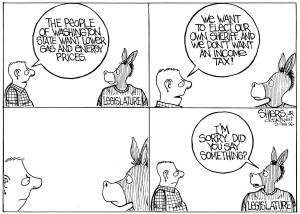
People get upset with high gas prices and paying income taxes, whether state or federal. Why? Because the costs are direct and easily seen. Hopefully, with this comparison of whether to fly or drive or whether a state has an income tax but low gas prices, you will realize the issues are very complex. Then add in the question of whether gasoline or e-vehicles are more environmentally friendly.
Life is complicated. Do your research, or not. (Research is time consuming.) All these questions and others that I haven’t even dealt with should be considered. The point about sharing the tradeoff between driving or flying to Minnesota and back is to give you an overview of all the decisions we have to make while living our lives.
We’re glad we drove.