Plateau dentists aid Hondurans
Published 12:40 pm Thursday, December 11, 2008
By Casey Steiner
The Courier-Herald
According to the CIA world factbook, the average Honduran citizen is 19 years old and lives below the country's poverty line. Most get along without electricity, 27 percent are unemployed and two of every 100 people live with HIV.
Thus, any form of help can go a long way in this impoverished nation, and Enumclaw dentist Dr. Brent Skovmand is trying to make a difference one mouth at a time.
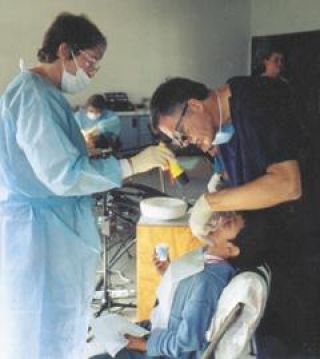
A team of dental assistants and hygienists accompanied Skovmand and Dr. John Loney of Black Diamond the last week of October on a trip to Tegucigalpha to provide dental support. The journey was one of seven trips Skovmand has made to Honduras in coordination with a mission pastor who helps at the other end.
"People say, 'Why do it?'" Skovmand said. "With millions of people in need, a week-long trip to pull teeth is a drop in the bucket."
Skovmand said his team's dental assistance to Hondurans is reminiscent of a children's story where a boy walks the water line on the beach tossing sand dollars back in the ocean before they dry up. A friend laughs at the boy, saying his hard work doesn't matter because there is no way he'll be able to save them all. The boy responds after picking up another sand dollar, "it matters to this one," and continues his walk up the beach.
"We may not reach them all," Skovmand said, "but it matters to the few we do help."
So far the trips have been made mostly to pull teeth. During a Monday-through-Friday work week the group sees a few hundred patients per day in a less-than-ideal work atmosphere. Extractions are performed in a wing of an electricity-free, open aired (no walls) church, but the patients don't know any better and the line literally runs out the door and around the corner of the building.
"We're just trying to be supportive," Skovmand said. "We take for granted all the nice things we have in the States. They're poor people and they appreciate our help."
Dentists in Honduras are a rarity and the profession certainly doesn't hold the esteem it does in the United States. According to Skovmand, Honduran dentists charge $35 per filling and are lucky to see one patient per day - an income far inferior to American colleagues.
"They live without electricity, many of them have no jobs and most struggle to find food," Skovmand said of the average citizen. "They definitely don't have the means to afford dental care. The people are amazing. They have a lot of dignity and honor. Money really isn't important to them since nobody has it."
Skovmand recommends the trip to all of America's youth.
"I think every high school student should make the trip at least once," he said. "These people (Hondurans) live with next to nothing. Poor people living here (the U.S.) are rich in their eyes. I don't mean to be inconsiderate, but it's true. If kids had a better idea how good they have it, attitudes might change. Things we take for granted in our everyday lives, they've never seen - they don't even know they exist."
Ice is the first example the doctor thought of, when asked about everyday items Hondurans are oblivious to. The warm climate of Latin America never freezes and since electricity is for the most part nonexistent, there are no means to freeze anything - no ice for their Cokes, no means to freeze meat for another day, no TV dinners, no frozen pizzas - nothing frozen, period.
"We dumped a cooler of ice out into the street for the kids to play with and they didn't know what it was, they had never seen ice before," Skovmand said. "Within a couple of minutes they figured it out and were putting it down each other's shirts."
Since shipping supplies to the area has been difficult due to high criminal activity, doctors have only been able to provide and use the supplies taken with them on the trip. Soon, Skovmand hopes to hook up with a business in Southern California to safely ship citizens measures for prevention of gum disease and tooth decay.
"It costs a lot of extra money to have to take supplies down there," Skovmand said. "We're constantly looking for ways to ship items. Once we figure it out we'll be able to help out on a more regular basis."
Skovmand is considering splitting up his team to make more frequent visits to the Honduran capital in years to come.
"It makes us feel good and there are an awful lot of people down there who could use our help," Skovmand said.
Casey Steiner can be reached at csteiner@cmg-northwest2.go-vip.net/courierherald.