Weigel stepping down after 25 years with police force
Published 3:56 pm Thursday, April 30, 2009
By Kevin Hanson, The Courier-Herald
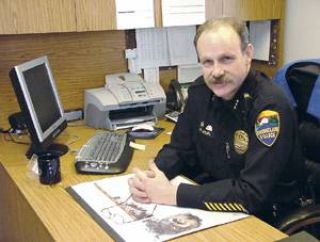
After 25 years of pulling on a police uniform - the last six as Enumclaw's chief of police - Bruce Weigel is calling it a career.
"I spent my entire career in Enumclaw," Weigel said, noting he first reported for duty May 1, 1978.
A number of factors - some personal, some professional - conspired to convince Weigel, 53, it was time to retire. He had been giving thought to the idea for the past year or so, he said. "It's just not the same job it used to be," he said. "It's just time for me to move on."
Born in Bismark, N.D., Weigel has spent most of his life on the Plateau. His family moved to Enumclaw during his third-grade year and Weigel graduated from Enumclaw High School in 1969. After a stint in the Army, Weigel bounced around some, working on a Wyoming cattle ranch, working for the Corps of Engineers at Mud Mountain Dam and driving a logging truck for Weyerhaeuser.
"It was pretty obvious to me the future for the timber industry would be fairly short," Weigel said. About that time, he was having lunch conversations with Black Diamond's police chief, who suggested a career in law enforcement.
"I started kicking the idea around," Weigel said, and he eventually applied for jobs with both the Enumclaw and Seattle departments. He was hired by his hometown force, went through the police academy, and spent 10 years as a patrol officer. He was then promoted to sergeant, quickly advanced to lieutenant and, in March 1998, was named chief by then-mayor George Rossman.
Changes to the city
During his 25 years in the police business, the face of Enumclaw has changed dramatically, Weigel said.
A couple of decades ago, when the populations was about half of what it is today, the city was a bit more rough-and-tumble, the chief recalls. It had a blue-collar edge and citizens "worked hard and played hard," he said. "It was a pretty strange weekend if we didn't have three or four bar fights a night," he said, adding that police would arrest more than 200 drunk drivers each year.
Now, he sees a town of commuters, as logging and farming have given way to white-collar professions.
The changing demographics, Weigel said, haven't meant an end to crime. Rather, the police are simply seeing different crimes committed.
In his early days, "if we had an auto theft a year it was pretty notable," Weigel said. Now, his department might handle a dozen such cases each month. When it comes to drugs, the marijuana-growing operations of 25 years ago have been replaced with meth labs.
A huge difference in police work, he said, stems from the ever-growing emphasis on domestic violence. Twenty-five years ago, it was tougher for police to make a case against a violent spouse, because the victim, usually a woman, was unwilling to pursue charges.
"One of the best things the Legislature has done in the last 20 years," he said, was enact a "mandatory arrest" provision. If police see evidence of violence, they arrest the suspect. The law, Weigel explained, "took a lot of guesswork out of the situation."
There's been a shift in attitude toward law enforcement since he became a cop, Weigel said, and it's not a change for the better. For example, if a youngster was misbehaving, "we used to be able to take the kid home and be fairly confident the parents would deal with the situation."
Now, he said, accountability is lacking. Often, in such circumstances, "the response we get from parents is, 'why are you picking on my kid,'" Weigel groused.
The underlying problem behind youth crime, he said, is "a shortened childhoodŠa loss of innocence at an early age." There are too many negative influences in a child's life these days, the chief said. When there aren't an adequate number of "countering influences," he said, youth wind up in the legal system.
In general, police have to be more cautious these days and always on guard for situations that could be perceived incorrectly, Weigel said, noting officers could be more informal in years gone by. "You need to be careful with what you say," he explained, because there are folks quick to criticize.
Is being a police officer simply less fun that it used to be? "Absolutely," Weigel replied. "The general trend within the profession is there are a lot less folks willing to put up with the grief."
Aside from the changing nature of police work, Weigel deals with a health problem, Type II diabetes. "It's easier to control when I'm away from here," he said.
Heading for quieter times
"I'm ready for some different challenges in my life," Weigel said, admitting a primary challenge will be convincing some fish to bite. He compares his current situation to that of 1972 when he was discharged from the Army - the future is wide open.
A likely destination with be the northeast corner of Oregon, where Weigel and his wife, Kathleen, own 160 acres of land. They made the purchase several years ago and visit occasionally so Weigel can mend fences and work on the home that's been sitting empty.
Seventy acres has been leased to a neighbor who grows wheat, but Weigel envisions raising livestock. Ranching is a tough lifestyle, he admits, but there's a key to keeping things stress-free. "Just as long as I break even, I'm happy," he said, noting that the ranch won't be counted on to put food on the table.
The Weigel's four children are grown and on their own. A son lives in Grand Coulee, Wash., there's a daughter in Buckley and two daughters in Seattle.
The Oregon farmland is fairly isolated, about 40 minutes from the nearest town of any real size, but that doesn't bother the retiring chief, who admits he doesn't need constant social interaction. After 25 years of dealing with the public and fellow officers, the quiet will be welcomed. When it's pointed out he could go for days without seeing another person, Weigel just smiles and says, "that's not a problem."
Kevin Hanson can be reached at khanson@cmg-northwest2.go-vip.net/courierherald